Best Machine Translation Tips for Global Buyers?
In an increasingly global market, effective communication is crucial for business success. The demand for translation services has surged, with the machine translation (MT) industry projected to reach over $983 million by 2027. Buyers are keen to leverage the best machine translation tools to enhance their cross-border communication. However, navigating this landscape can be daunting.
Quality and accuracy are paramount. A report from the International Organization for Standardization emphasizes that 75% of consumers prefer content in their native language. Yet, reliance on MT can lead to misinterpretations. It's essential to understand that not all MT solutions deliver the same level of quality. Factors like language pair, content type, and context play a significant role in their effectiveness.
Moreover, training and continuous improvement are necessary. Many users report a steep learning curve with MT tools. They often struggle with output that lacks nuance or cultural relevance. It's vital to reflect on these challenges and invest time in selecting and optimizing the best machine translation services. This approach can ultimately boost market reach and foster stronger global relationships.

Understanding Machine Translation: An Overview for Global Buyers
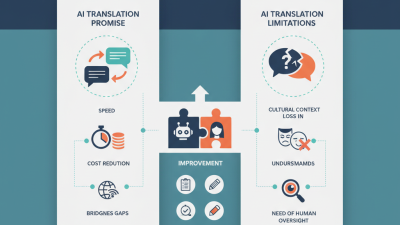
Machine translation has emerged as an essential tool for global buyers. Understanding this technology is crucial. It helps bridge communication gaps across different languages. For companies looking to expand, accurate translations can enhance customer reach. Yet, the quality of machine translations can vary. Sometimes, the nuances of a language get lost in translation, leading to misunderstandings. This underscores the importance of reviewing and proofreading translations before use.
Global buyers should explore various options in machine translation. Some platforms use advanced algorithms that improve accuracy. However, these tools may still struggle with idiomatic expressions. Businesses must consider their target audience's language preferences. An appreciation for cultural context can significantly improve the effectiveness of translations. Relying solely on machine translation can lead to missed opportunities. It's essential to integrate human oversight in the translation process.
Choosing the right technology involves understanding its limitations. Machine translation may not always reflect the subtleties of human language. Inconsistent terminology can occur, especially in specialized fields. Buyers should weigh the pros and cons of using automation in their operations. Balancing technology with human insight is key to successful global communication.
Global Language Translation Demand by Region
Key Factors to Consider When Choosing a Machine Translation Service
When selecting a machine translation service, consider factors that go beyond basic functionality. The industry's growth rate is a significant indicator; the machine translation market is expected to reach $983 million by 2027, reflecting a compound annual growth rate of 19.0% from 2020. Buyers need to ensure that their chosen service can keep pace with this evolving landscape.
Accuracy is a critical factor in translation quality. A 2021 study showed that over 70% of global companies prioritize translation accuracy over speed. This highlights the necessity of using services that incorporate advanced technologies like neural machine translation. However, relying solely on technology can lead to misinterpretations in cultural context. It's essential to assess whether the service includes human oversight to refine translations.
Another vital aspect is integration capabilities. A report from Common Sense Advisory indicated that 55% of businesses need machine translation tools integrated with their current systems. Compromising this need may lead to inefficient workflows. Always verify the ease of integration and compatibility with existing platforms, as this decision significantly impacts user experience and operational efficiency.
Tips for Evaluating the Quality of Machine Translations
Evaluating the quality of machine translations requires a keen eye and a structured approach. According to a report by the European Commission, 70% of businesses now rely on machine translation for multilingual content. But the accuracy can vary significantly. A study from the University of Edinburgh found that up to 28% of machine-translated texts may contain errors that could mislead readers.
It's essential to test translations on different metrics. One effective method is to use bilingual experts who can assess fluency and accuracy. A staggering 67% of users report feeling confused by machine-generated output, emphasizing the necessity for human oversight. Evaluators should emphasize context and cultural nuances that software may overlook. Regular audits can help identify recurring issues, reflecting the importance of continuous improvement.
Users should also pay attention to metrics such as BLEU scores, which quantify translation quality. However, this method can be misleading. Research indicates that high BLEU scores do not always correlate with user satisfaction. Therefore, obtaining feedback from end-users is crucial. Real-world testing on audiences can uncover hidden flaws that algorithms may miss.
How to Optimize Machine Translation for Your Business Needs
Machine translation has become essential for businesses operating globally. Optimizing this tool significantly improves communication and enhances customer engagement. To meet your business needs, understanding the limitations of machine translation is crucial. Errors can arise from idiomatic expressions or cultural nuances, leading to misunderstandings. It's important to monitor translations and refine them, ensuring they resonate with your target audience.
Utilizing specialized dictionaries and glossaries can enhance accuracy. Implementing a feedback loop also fosters improvement. Regularly reviewing translations with native speakers provides insights and highlights any shortcomings. This collaborative approach allows businesses to adjust their strategies based on real-world experiences.
Investing time in training your machine translation engines can lead to better results. Fine-tuning algorithms according to industry-specific terminology enhances understanding. However, practitioners must remember that machine translation is not infallible. Balancing automation with human oversight is vital for maintaining quality and relevance in translations.
Common Challenges with Machine Translation and How to Overcome Them
Machine translation can streamline communication for global buyers. However, it comes with its own set of challenges. One common issue is accuracy. Machine translation often struggles with idiomatic expressions, leading to awkward or unclear translations. This can create misunderstandings between buyers and suppliers. It's essential to review the output carefully and verify its context before taking action.
Another challenge is cultural nuances. Machines may ignore regional dialects and cultural references. This oversight can alienate potential partners. To mitigate this, work with native speakers or professional translators who understand local contexts. Their insights can bridge gaps that machines often miss.
Additionally, the tone and style may suffer in automated translations. A formal document could end up sounding overly casual, changing its intent. It's advisable to set clear guidelines for desired tone and style in machine translations. Engaging experts who can refine the output is a worthwhile investment. Their expertise ensures that the final product resonates well with the target audience.
Best Machine Translation Tips for Global Buyers - Common Challenges with Machine Translation and How to Overcome Them
| Challenge |
Description |
Tip to Overcome |
| Cultural Nuances |
Machine translation can miss local idioms and cultural references. |
Involve native speakers for context checks. |
| Technical Jargon |
Specialized terminology may not translate accurately. |
Use industry-specific MT engines or glossaries. |
| Context Loss |
Translation may lack continuity with previous text. |
Provide full document context to the MT service. |
| Quality Consistency |
Variable output quality across different languages. |
Regularly review and update translations for consistency. |
| Localization Challenges |
Translations may not be culturally or regionally appropriate. |
Implement a localization process alongside translation. |








.avif)


.png)


