How to Choose the Right Content Translation Services for Your Business?
Choosing the right content translation services is crucial for any business aiming to expand its global reach. Industry expert Dr. Emily Johnson, a leading figure in localization, emphasizes, "Effective translation is not just about words; it's about culture." This speaks to the essence of content translation services, where every nuance matters.
In today's interconnected world, businesses face diverse challenges. Selecting the ideal translation partner can make or break your international efforts. A poor choice may lead to brand misrepresentation or customer confusion. Furthermore, not all services cater to every industry. Consider your unique needs carefully.
Navigating through numerous options can feel overwhelming. Some companies offer quick solutions with unclear quality measures. Insightful evaluations and client testimonials can guide your decision. Ensure the service understands your target market and maintains your brand voice. Remember, translation is not merely a change of language; it is the bridge to new audiences and opportunities.

Assessing the Importance of Content Translation in Today's Global Market
In today's global market, content translation plays a crucial role in reaching diverse audiences. A recent report indicates that over 75% of consumers prefer buying products in their native language. This highlights the necessity for businesses to consider translation services seriously. When customers feel comfortable, they are more likely to engage with a brand and make purchases.
However, not all translation services are created equal. Many businesses overlook the importance of cultural context, which can lead to misunderstandings or even offend potential clients. A study found that 60% of companies using automated translation tools saw a decrease in customer satisfaction. The nuances of each language can be lost when algorithms try to convert content directly. It's essential to choose a service that understands regional differences and cultural sensitivities.
Moreover, professional translators can help maintain the brand's voice and message. Without their expertise, a business risks diluting its identity in the international market. Yet, many companies focus solely on cost rather than quality. This short-sightedness can result in brand damage. It's vital to reflect on the long-term implications of translation choices. Investing upfront may yield better results and enhance customer loyalty in the end.
How to Choose the Right Content Translation Services for Your Business?
| Criteria |
Importance |
Suggested Actions |
| Cultural Relevance |
High |
Ensure the service provider understands local customs and nuances. |
| Expertise in Industry |
Medium |
Select translators experienced in your specific sector. |
| Quality Assurance Processes |
High |
Look for services with editing and proofreading steps in place. |
| Turnaround Time |
Medium |
Evaluate if their deadlines align with your project timelines. |
| Price Structure |
High |
Ask for detailed pricing to avoid hidden costs. |
| Client Reviews |
High |
Research past client feedback for insights into their work quality. |
| Technology Tools |
Medium |
Check if they use translation management systems and CAT tools. |
Identifying Business Requirements for Effective Content Translation Services
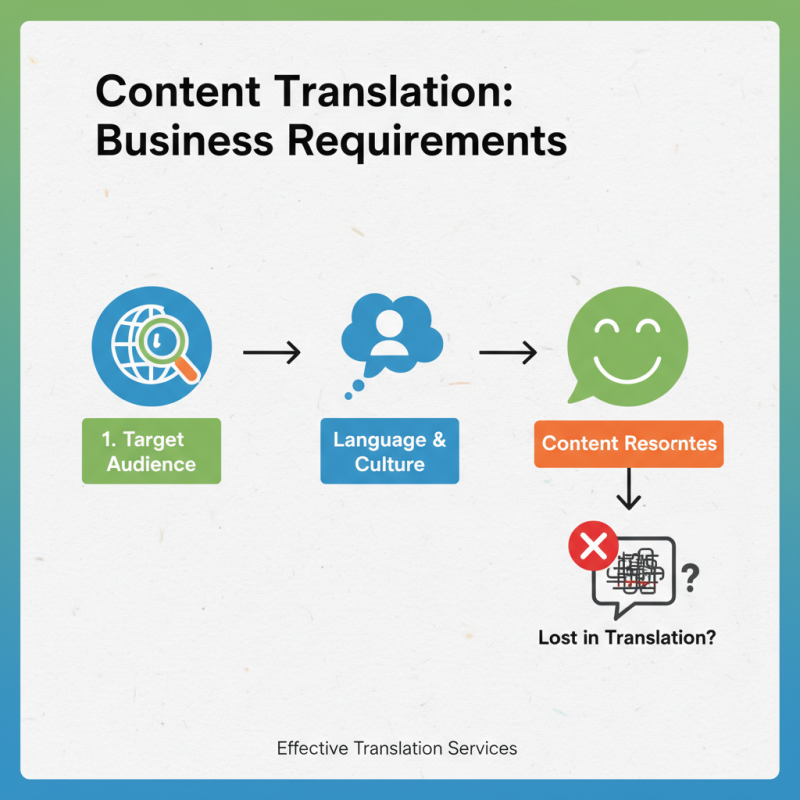
Identifying business requirements is crucial for effective content translation services. Start by assessing your target audience. Understand their language preferences and cultural nuances. This helps ensure your content resonates with them. If you overlook this step, your message may get lost in translation.
Next, consider the types of content you need to translate. Are they marketing materials, technical documents, or legal texts? Each category has different needs for accuracy and style. For instance, legal texts require precision, while marketing materials might need a more creative approach. If you fail to specify these requirements, the translation may not adequately fulfill your goals.
Budget is another essential factor. Determine how much you can allocate to translation services. Cheap services may seem tempting, but they often fail to deliver quality. Balancing cost and quality can be tricky. It’s important to weigh the potential return on investment against the expenses. In the end, reflecting on why these requirements matter will guide you toward better choices.
Evaluating Translation Service Providers Based on Accuracy and Expertise
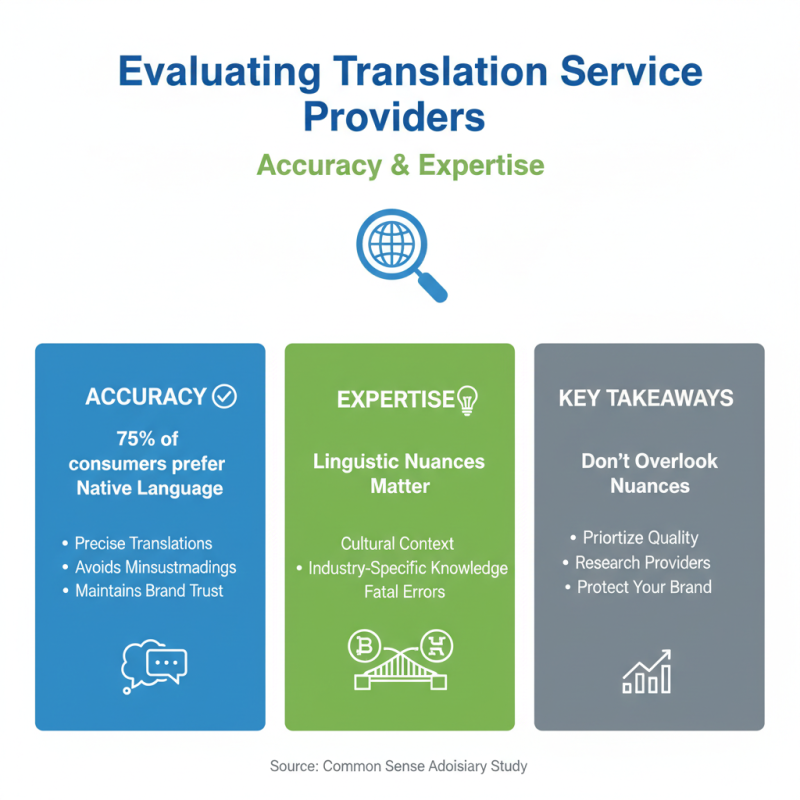
When evaluating translation service providers, accuracy is paramount. A study by Common Sense Advisory found that 75% of consumers prefer content in their native language. This statistic emphasizes the need for precise translations. A minor error can lead to misunderstandings and affect brand trust. Companies often overlook the importance of linguistic nuances, which can be fatal.
Expertise in specific industries can also make a significant difference. Specialized translators understand jargon and context. This skill set ensures your message resonates with the target audience. According to research, 92% of businesses believe that tailored translations improve customer engagement.
Tips for selecting a service: look for agencies with certified linguists. Request samples of their work. Consider feedback from previous clients. Don’t focus only on price. The right choice often goes beyond budget considerations. Remember, quality may save you costs in the long run. Lastly, always verify their cultural knowledge. Missteps in cultural context can tarnish your business reputation.
Considering Localization vs. Translation: Understanding the Differences
When considering content translation services, it's essential to distinguish between translation and localization.
Translation typically focuses on converting text from one language to another. However, localization goes deeper. It adapts the content to suit the culture and context of the target audience.
This might involve changing examples, images, or even colors to resonate better with local consumers.
For instance, a marketing campaign that works well in one country may fail in another if it doesn't consider regional preferences.
Localized content may require more time and creativity. It's not just about words; it's about making connections.
A direct translation could lead to misunderstandings or cultural faux pas. This can affect brand perception upfront.
Choosing the right service means weighing these differences carefully. Look for a provider that understands your industry.
They should be aware of local customs and trends. Be prepared to share insights about your target market.
If not, your message might get lost in translation. Ensure they can provide a tailored approach that reflects your goals.
Analyzing Cost Factors and ROI in Content Translation Investment
When investing in content translation services, understanding cost factors is crucial. The price often varies based on the language pair and project complexity. Specialized translations, like legal or technical documents, can be significantly more expensive. Additionally, deadlines may impact costs. Urgent translations typically carry a premium. It’s essential to balance quality with budget. Sometimes, cheaper services result in poorly translated content, leading to misunderstandings or cultural faux pas.
Assessing ROI for translation investments can be complex. Tracking engagement metrics post-translation is key. You can measure how translated content affects user interactions or sales. However, some businesses overlook these metrics or lack the tools to analyze them effectively. This can lead to decisions based on incomplete data. Additionally, learning from mistakes can be valuable. If certain translations do not resonate, it’s important to adapt and refine future strategies. Investing thoughtfully can lead to better market penetration and customer satisfaction.









.avif)


.png)


