10 Essential Tips for Using a Voice Translator Effectively?
In today's globalized world, communication barriers can hinder connections. A voice translator can bridge these gaps, allowing seamless interactions across languages. However, many users struggle to maximize the potential of such devices. Misunderstandings can arise from improper usage.
Effective implementation of a voice translator goes beyond mere translation. It involves context, tone, and expressiveness. Users often overlook these nuances. For instance, simply speaking slowly doesn't guarantee accuracy. A voice translator's effectiveness relies on a clear vocal tone and precise pronunciation.
Being aware of the limitations is crucial. No translation tool is perfect. Accents and dialects can lead to misunderstandings. Users should practice active listening, ensuring they grasp context. Adapting to cultural differences is equally important. Embracing these aspects can transform communication experiences, making every conversation meaningful.

Understanding the Basics of Voice Translator Technology and Its Applications
Voice translator technology is revolutionizing how we communicate across language barriers. At its core, it allows users to speak and hear translated phrases almost instantly. This can be a game-changer for travelers, business professionals, and anyone interacting with diverse cultures. Understanding how to use this technology effectively enhances communication and improves the overall experience.
One tip is to speak clearly and at a steady pace. Phrases can get lost in translation when spoken too quickly. Background noise can also interfere, making it harder for the device to pick up your voice. Testing your device in different environments is wise. Also, keep sentences simple. Long or complex sentences can confuse the translator, leading to inaccurate results.
Practicing is essential. Try conversing with a friend or while doing simple tasks. This will help you understand the limitations and improve your interaction. Sometimes, the translation may not reflect the exact meaning. Even with the best technology, nuances can get lost. Remaining patient and adaptable is crucial in these situations. Be prepared to clarify or rephrase your thoughts. This approach ensures clearer communication in your conversations.
Key Features to Look for in a Voice Translator Device
When choosing a voice translator, consider the essential features. Look for accuracy in translation. A device that captures nuances in speech is vital. Check the supported languages. Not every translator handles all languages well. Make sure it offers the ones you need. Battery life affects usability. You don't want to run out of power during a conversation.
Ease of use is crucial. A complex interface can be frustrating. Look for a device with clear buttons or voice commands. Some models include additional features like text translation. This can be handy in written communication. Pay attention to the sound quality as well. Clear audio helps avoid misunderstandings.
Think about connectivity options too. Wi-Fi-enabled devices offer better translations. However, they might rely on stable internet access. Reflect on your needs. A device that works well in urban settings may struggle in remote areas. Balancing features with your specific travel scenarios is important. Always prioritize what you deem essential.
Voice Translator Usage Effectiveness
Best Practices for Accurate Voice Input and Output when Using Translators
When using a voice translator, clarity is key. Speak slowly and enunciate your words. This way, the device can pick up each syllable accurately. Background noise can distort input, so find a quiet space if possible. Hearing your own voice can also help. Try repeating phrases to see how the device interprets them.
Pace is another important factor. Rapid speech often leads to misinterpretations. If the translation seems off, pause for better accuracy. Context matters as well. One word can have various meanings. Provide full sentences to give the translator good context. Don’t hesitate to rephrase if the output doesn’t match your intent.
Keep in mind that imperfections may arise. Your accent or dialect can influence the translation. Practice patience when dealing with errors. Sometimes, the translator won’t perfectly convey the message. Reflect on these moments as learning experiences instead of frustrations. Each usage improves your skills and helps you understand the limitations of technology.
Common Challenges in Voice Translation and How to Overcome Them
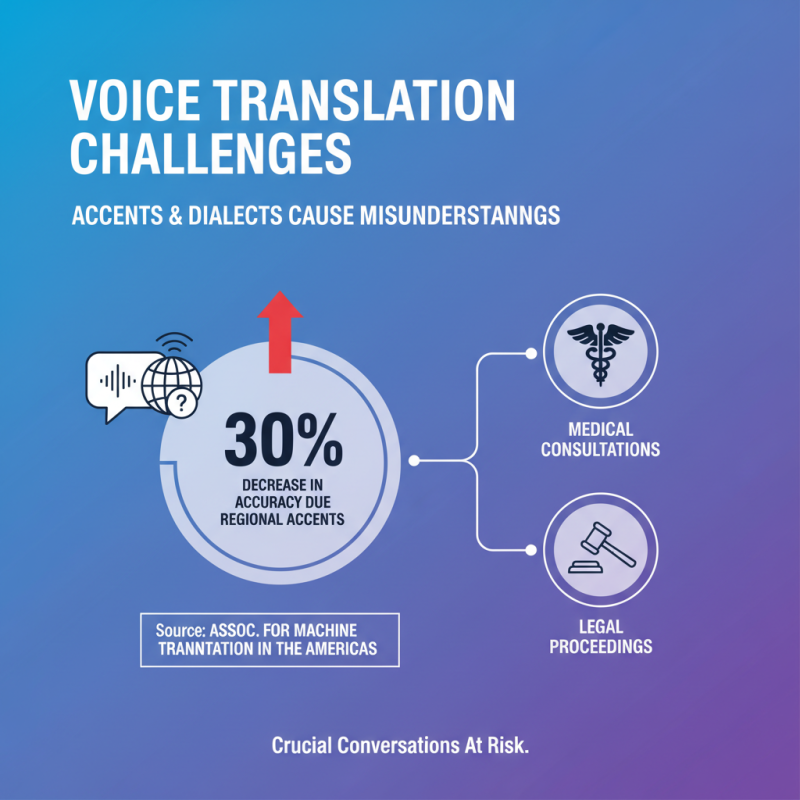
Voice translation technology has made remarkable strides, but users still face several challenges. Misinterpretations can arise frequently due to accent and dialect variations. A study from the Association for Machine Translation in the Americas indicates that regional accents can decrease translation accuracy by up to 30%. This can lead to misunderstandings in crucial conversations, such as in medical or legal settings.
Another common issue is background noise, which can significantly affect a voice translator’s performance. According to research by the International Speech Communication Association, ambient noise can lower speech recognition rates by nearly 25%. Users may find that quieter environments yield better results, but this isn’t always possible. This highlights the importance of choosing a conducive setting for translation.
Technical glitches also pose a challenge. Connectivity issues or software malfunctions can disrupt communication. Reports show that nearly 40% of users have encountered such problems, which can lead to frustration and hinder effective communication. Being aware of these potential setbacks can help users prepare better.





.avif)


.png)


