What is a Language Translator and How Does it Work?
In today's globalized world, effective communication is vital. A language translator plays a crucial role in bridging linguistic divides. According to industry reports, the language services market is projected to reach $56 billion by 2027. This growth highlights the importance of accurate translations in various sectors. Businesses, healthcare providers, and educational institutions increasingly rely on language translators to connect with diverse audiences.
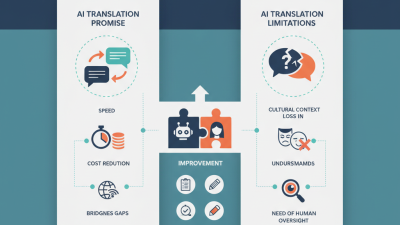
The technology behind language translators has advanced significantly. From machine translation to sophisticated algorithms, these tools offer quick solutions for many. However, challenges remain. Context, idiomatic expressions, and cultural nuances often lead to misunderstandings. For instance, a direct translation might fail to convey the intended message. As we embrace these tools, it’s essential to reflect on their limitations. Effective communication goes beyond mere words.
Human translators still play an indispensable role in nuanced situations. They ensure that subtleties are preserved, which machines often overlook. Statistics show that 75% of companies prefer human translators for content that requires emotional engagement. This reveals a gap that technology alone cannot fill. As the demand for language translation continues to grow, we must evaluate how we integrate technology with human insight.
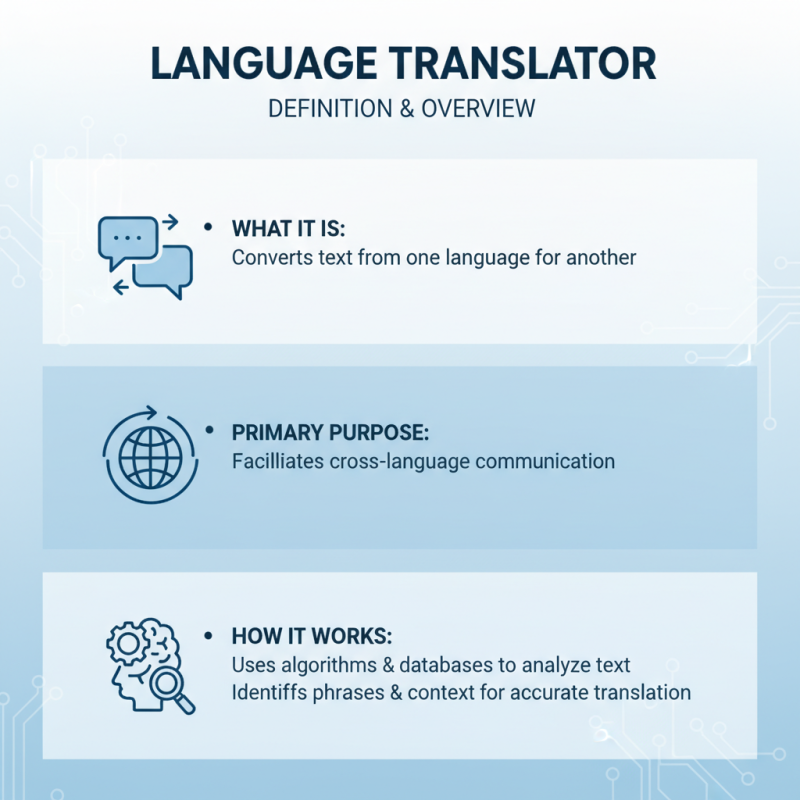
What is a Language Translator: Definition and Overview
A language translator is a tool that converts text from one language to another. Its primary purpose is to help people communicate across language barriers. This technology uses algorithms and databases to analyze text. It identifies key phrases and contextual meanings to provide an accurate translation.
Tips: When using language translators, always check the context. Certain phrases may not translate directly. Be aware that idioms and cultural nuances often get lost in translation.
While many translators provide instant results, they are not perfect. Some languages have complex grammar rules. Machine translations may struggle with these intricacies. Users should review translations carefully. Accuracy can vary based on the complexity of the source material.
Tips: Try breaking down longer sentences into smaller parts. This makes it easier for translators to capture meanings accurately. Learning basic phrases in another language can also enhance communication.
Types of Language Translation: Human vs. Machine Translation
Language translation is a crucial aspect of communication in our globalized world. It can be broadly classified into two types: human translation and machine translation. Each has its own merits and downsides, impacting various industries differently.
Human translation relies on skilled linguists. They understand context, idioms, and cultural nuances. According to a recent report by the American Translators Association, 73% of organizations prefer human translators for accuracy. However, human translation can be time-consuming and costly, especially for large projects.
In contrast, machine translation uses algorithms and artificial intelligence to translate text. This method is faster and often more cost-effective. The research from Statista shows that the machine translation market is expected to grow by 25% annually, reaching $983 million by 2027. Yet, while machines excel in speed, they struggle with emotional context and subtleties. Mistakes can lead to misunderstandings that a human translator would likely avoid.
Tips: Always consider the purpose of your translation. If it's for legal or medical documents, human translation may be essential. For informal or personal use, machine translation can suffice. Be aware that relying solely on machines can lead to awkward phrasing or incorrect interpretations. Balance is key in choosing the right type of translation for your needs.
The Technology Behind Language Translators: Algorithms and AI
Language translators have transformed how we communicate across different languages. At the core of these tools lie complex algorithms and artificial intelligence. The technology processes vast amounts of text, identifying patterns and meanings. These algorithms break down sentences into smaller parts, analyzing grammar and context. They learn from the data fed into them, enabling them to improve over time.
However, the technology isn’t flawless. Translators can misinterpret idiomatic expressions or regional dialects. These nuances often get lost in translation. For example, a phrase might work well in one culture but sound awkward in another. AI must grapple with the subtlety of human emotion and intent. This leaves room for improvement. Errors can lead to confusion, especially in critical communications.
AI models rely heavily on the data they learn from. If the dataset is limited, the outcome may be biased. As these systems evolve, the challenge remains to ensure accuracy and inclusiveness. Continuous iterations and user feedback are essential. The journey of refining these translators involves constant learning and adaptation.
What is a Language Translator and How Does it Work? - The Technology Behind Language Translators: Algorithms and AI
| Feature |
Description |
Example |
| Machine Translation |
The process of using algorithms to automatically translate text from one language to another. |
Google Translate |
| Neural Networks |
A subset of AI that mimics the workings of the human brain to improve translation accuracy. |
Deep Learning models |
| Translation Memory |
A technology that stores previously translated segments to aid future translations and maintain consistency. |
CAT tools |
| Post-editing |
A process where human translators review and edit machine-generated translations for accuracy. |
Quality assurance in professional translation services |
| Language Pair |
The specific source and target languages involved in the translation process. |
English to Spanish |
Key Statistics on the Global Language Translation Market
The global language translation market has grown significantly in recent years. In 2021, it was valued at approximately $55 billion. Experts predict it will reach around $88 billion by 2027. This indicates a compound annual growth rate (CAGR) of nearly 8.5%. Such growth shows the increasing demand for translation services across various industries.
One key driver of this expansion is globalization. Businesses are keen to reach international audiences. The internet plays a crucial role in this process. Online content must be accessible in multiple languages. Additionally, more than 75% of consumers prefer to buy products in their native language. This statistic highlights how translation is a vital tool for companies aiming to boost sales.
However, challenges remain. Quality assurance in translation is often overlooked. Machine translations are convenient but not always accurate. This can lead to misunderstandings. Professional human translators still play an essential role. Balancing costs with quality is an issue many companies face. The translation market continues to evolve, reflecting the complex world we live in.
Future Trends in Language Translation Technology and Usage
The landscape of language translation technology is evolving rapidly. Artificial intelligence and machine learning are at the forefront. These advancements promise faster and more accurate translations. Yet, they are not without flaws. Sometimes, context and cultural nuances get lost. This can lead to misunderstandings.
AI-driven translation tools are becoming more user-friendly. They help bridge communication gaps in real-time. However, they struggle with idiomatic expressions. These phrases often require deeper knowledge of the culture. Users may find that some translations feel unnatural or awkward. This indicates a need for human oversight.
As we look ahead, the integration of augmented reality and voice recognition may reshape translation. Imagine a world where you can speak, and translations appear visually in your line of sight. Yet, such technology raises questions about dependency on machines. Will we lose the art of understanding languages deeply? These are reflections we must consider.
Future Trends in Language Translation Technology






.avif)


.png)


