2026 How to Use a Voice Translator App Effectively for Travel and Communication?
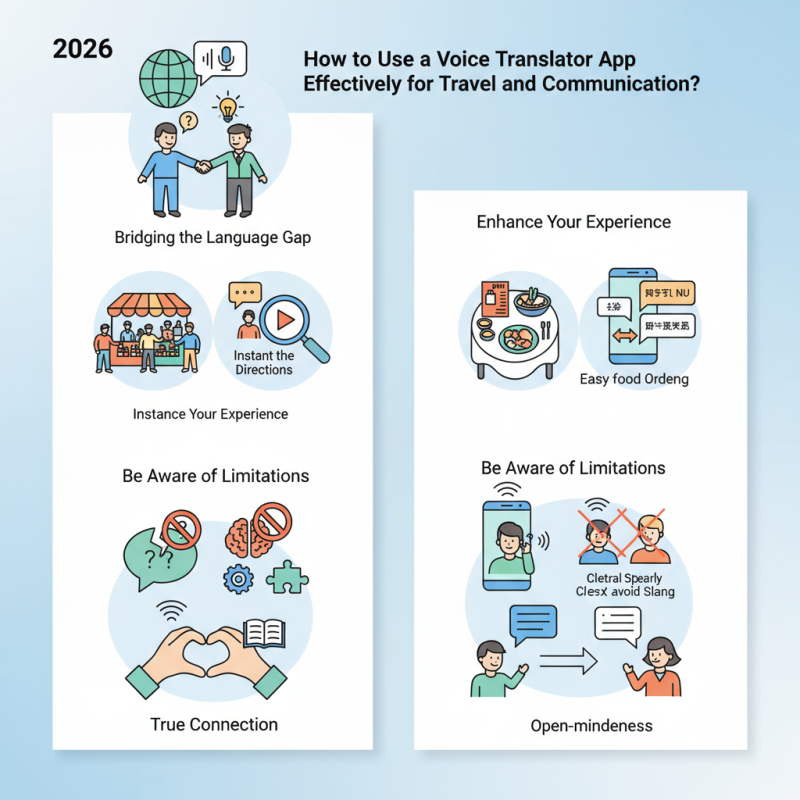
Traveling to new places is exciting. However, language barriers can create challenges. A voice translator app can help bridge that gap. These apps allow travelers to communicate easily with locals. They offer instant translations for conversations, menus, and signs.
Consider how a voice translator app can enhance your experience. Imagine asking for directions in a bustling market. With just a few taps, you can understand the responses. It’s also helpful in restaurants, where ordering food in a foreign language may feel daunting. However, relying solely on the app has its pitfalls. Sometimes translations may not capture cultural nuances or context.
While using a voice translator app, be aware of its limitations. Speak clearly and avoid slang for accurate translations. You may encounter moments of confusion, especially with idiomatic expressions. Embracing these situations can lead to memorable interactions with locals. The app is a tool, not a replacement for true connection. Hence, always approach conversations with an open heart and mind.
Understanding Voice Translator Apps: Key Features and Functions
Voice translator apps have transformed communication while traveling. They help break down language barriers instantaneously. Understanding their key features enhances your travel experience.
These apps typically include voice recognition, translation, and text display functions. Voice recognition allows you to speak naturally. The app converts your speech into text, then translates it. Some apps offer real-time conversation modes, making dialogues smoother. Text display features can help you read translated sentences. This is quite useful in busy environments.
Tips: Test the app before your trip. Familiarize yourself with its functions. Ensure you download languages you might need. Connection issues can be frustrating. Not all translations are perfect, so be ready for misunderstandings. Always keep a phrasebook as a backup.
Setting Up the App for Optimal Performance and Accuracy
Setting up a voice translator app correctly is crucial. Begin by selecting a user-friendly app that suits your needs. Download and install it on your device. Ensure you have a stable internet connection for real-time translations. Open the app and set your preferred languages. Familiarize yourself with the interface. Navigation should be effortless.
Adjust settings for optimal performance. Some apps allow you to customize translation speed. Experiment with different options to find what works best for you. Explore additional features. Voice recognition settings can enhance accuracy. Speak clearly and at a natural pace. Remember, not every translation will be perfect.
Errors can occur, especially with idiomatic expressions. Be open to adjusting your phrasing. Practice using the app in various scenarios. On-the-go conversations may differ from planned dialogues. Take notes on any misunderstandings. Over time, you'll learn where the app excels and where it needs improvement. Each experience will help refine your communication skills while traveling.
Effective Communication Tips when Using a Voice Translator App
Using a voice translator app can greatly enhance your travel experience. Effective communication is crucial in unfamiliar environments. A study by the Common Sense Advisory found that 72% of consumers prefer to connect in their native language. This shows the importance of having tools ready to bridge linguistic gaps.
When using a voice translator, clarity is vital. Speak clearly and at a moderate pace. Background noise can disrupt the app's ability to comprehend. A survey indicated that 40% of users struggled with noisy settings. Avoid jargon or complex phrases. Short, simple sentences work better. For example, instead of saying, "Could you please tell me how to get to the nearest restaurant?", try, "Where is the nearest restaurant?"
Sometimes, the translation may not be perfect. The app may misinterpret accents or slang. This can lead to confusion. It's good to stay patient and be ready to rephrase or repeat your questions. Even a small cultural nuance can alter meaning. According to research, 63% of travelers admitted to facing misunderstandings while using translation apps. Being aware of these limitations can help you adapt and communicate more effectively.
Handling Offline Scenarios: Using Voice Translators without Internet
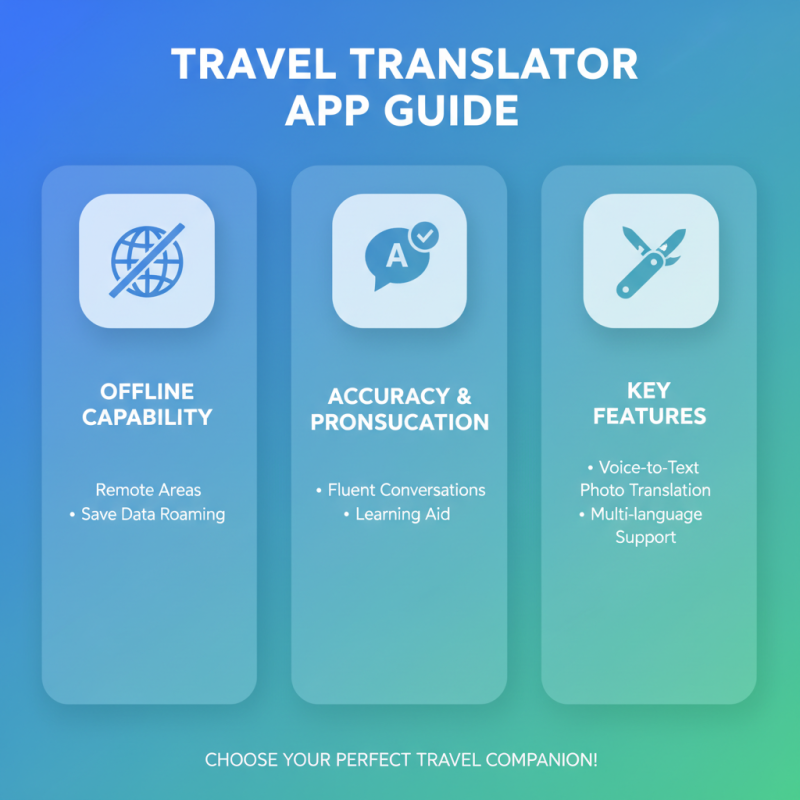
Traveling to a new country can be thrilling, but language barriers often hinder smooth communication. Luckily, voice translator apps have made it easier to connect with locals, even without internet access. Many travelers forget that offline features are crucial when exploring remote areas with spotty reception.
One way to handle offline scenarios is by downloading language packs in advance. This prep work ensures you have the essential phrases ready when needed. Moreover, always check the app’s compatibility with your device’s operating system. Sometimes, updates can cause bugs, making the tools unreliable during travel.
Utilizing voice translators effectively is about more than just downloading apps. Ensure that the app supports multiple dialects, as nuances can significantly affect understanding. Speak clearly into the device; it can misinterpret words in a noisy environment. Patience is vital, too. Sometimes, it may take a moment for the app to process phrases accurately. In such cases, being open to repetition or rephrasing can lead to better communication.








.avif)


.png)


